Court Cases
Featured Cases
Jan 12, 2026

Fell v. Trump (formerly Stainnak v. Trump) - Challenging Purge of DEI-Associated Federal Workers As Discriminatory and Retaliatory for Perceived Political Beliefs
Federal employees filed a complaint against the Trump administration for targeting workers, especially people of color, women, and non-binary workers, for participating in diversity, equity, and inclusion (DEI) activities, violating their First Amendment rights.
All Cases
28 Court Cases
Oct 21, 2026
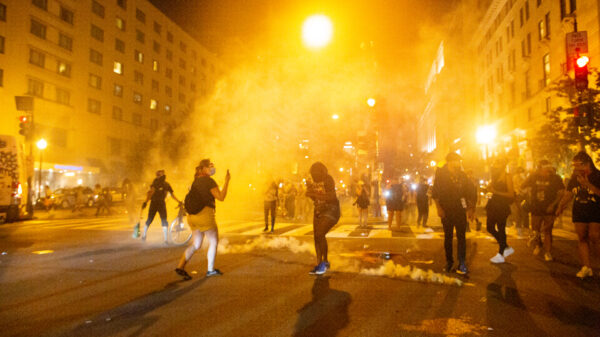
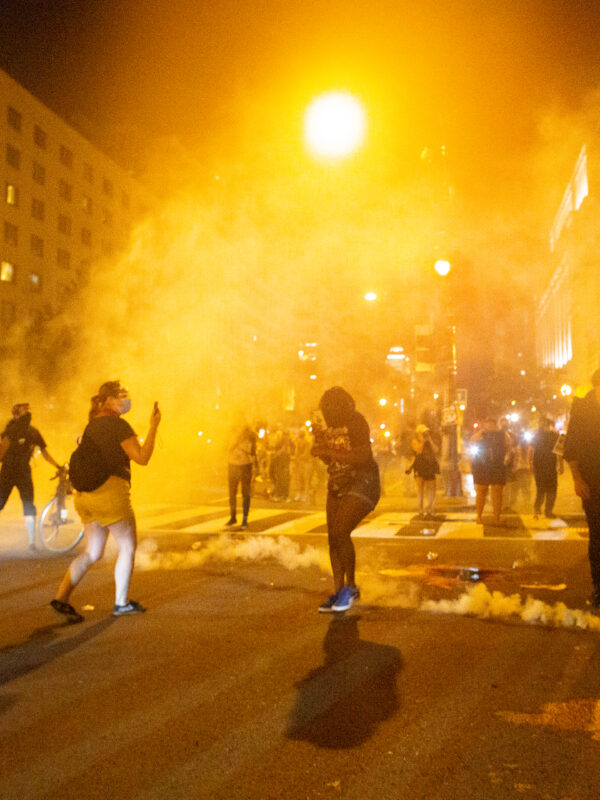
Asinor v. District of Columbia – Challenging Use of Chemical Irritants and Less-Lethal Projectiles Against Demonstrators and Journalists
The ACLU-DC filed a lawsuit on behalf of two photojournalists against the District of Columbia and 8 D.C. Metropolitan Police Department officers for unleashing chemical irritants and stun grenades one month after the D.C. Council instilled a ban on the use of these weapons during demonstrations.
Apr 14, 2026
Carvajal-Muñoz v. Ravencamp – Seeking Accountability for Violent Abduction of Lawful Immigrant by Federal Agents
People in the United States have the right to go about their daily lives without being suddenly and violently abducted because of their skin color or ethnicity, or for no reason at all. This suit seeks to vindicate that right and to redress grave constitutional violations.
Juan Sebastián Carvajal-Muñoz (“Sebastián”) moved to Maine from Colombia on a student visa to earn his master’s degree in civil engineering at the University of Maine. He then accepted a job as a civil engineer, specializing in conducting soil and foundation analyses for bridge construction across Maine. He was invited to stay in the United States under the H-1B visa program, which permits noncitizens to work legally in the U.S. if they can “perform services of exceptional merit and ability.”
On the morning of January 22, 2026, during the federal government’s “Operation Catch of the Day” immigration crackdown in Maine, armed federal agents abducted Sebastián while he was driving to work. They cut in front of Sebastián’s car, bashed in his window, dragged him out of the car, handcuffed him, and left his car running in the middle of the street in downtown Portland.
Sebastián offered proof of his lawful immigration status. Yet the agents told Sebastián that his visa would be revoked and placed him in full-body shackles.
Agents then drove Sebastián around for hours, refused to release him despite instruction to do so, and instead locked him in a windowless cell in an ICE facility in Massachusetts. As abruptly as the agents had abducted him, they released him in Burlington, Massachusetts, after 9 p.m. that night, leaving him to find his way back home.
The agents’ actions were unconstitutional for multiple reasons. First, federal agents stopped Sebastián without any reasonable suspicion that he was in the country unlawfully or had committed any other offense. Second, federal agents arrested him without a warrant and without probable cause to believe he was removable, ignoring proffered proof that he had lawful immigration status. Third, federal agents engaged in discrimination, arresting Sebastián for no reason other than his apparent race, skin color, or ethnicity. Fourth, federal agents used unreasonable force and violence against Sebastián, pointlessly breaking his car window, dragging him from his car, and placing him in full-body shackles. And fifth, independent of the unlawfulness of the seizure at its inception, the length of time agents kept Sebastián detained was likewise unreasonable and unconstitutional. The federal agents’ conduct violated the constitutional guarantees of equal protection and freedom from unreasonable search and seizure under the Fourth and Fifth Amendments.
The federal agents’ conduct toward Sebastián is consistent with DHS’s broader campaign of conducting mass immigration arrests without a warrant or any lawful basis. DHS’s dragnet ensnares noncitizens based solely on their race, skin color or ethnicity, including individuals like Sebastián with lawful immigration status. These brutal stops and arrests terrorize immigrant communities and disrupt even the most ordinary of activities—working, going to school, shopping, driving.
In addition to vindicating Sebastián's rights and compensating him for the physical and emotional harms he has suffered, this case is important to try to reestablish a critical path to holding federal officers accountable for constitutional violations. In 1971, the Supreme Court held that people could sue directly under the Constitution when federal officers violated their rights, but in 2017, the Supreme Court dramatically narrowed the ability of such cases to proceed—creating a huge and alarming accountability gap between federal and state officers. For example, after Minneapolis Police Officer Derek Chauvin murdered George Floyd in 2020, Mr. Floyd’s family sued the City of Minneapolis and police officers for violating his constitutional rights, ultimately securing a $27 million settlement. By contrast, following the recent Supreme Court's turn against federal-officer accountability, federal law does not allow the families of Alex Pretti and Renee Good to file that same type of lawsuit against the federal agents who shot and killed them just miles from where Mr. Floyd was murdered.
Historically, people could use state law to sue federal officers for wrongdoing. We believe that state law could once again play that role, closing up the accountability gap that the Supreme Court has created. The Maine Civil Rights Act is one of the most promising state laws currently on the books that could do so, so we have invoked it in Sebastián's case.
When federal agents face no consequences, that impunity invites more wrongdoing, turns our freedoms into empty promises, and leaves us all unprotected. U.S. courts have long recognized the fundamental legal principle that where there is a right, there must be a remedy. We hope this case will help make good on that promise and expand people's ability to seek justice when the federal government violates their constitutional rights.
Jan 16, 2026
U.T. v. Bondi (formerly U.T. v. Barr) – Challenging Government Policy of Sending Asylum-Seekers to Dangerous Countries
Dec 31, 2025
Damus v. Nielson - Challenging Trump Administration’s Unlawful Detention of Asylum Seekers
Jul 29, 2025
Black Lives Matter D.C. v. Trump – Challenging Federal Officers’ Unprovoked Attack on Civil Rights Demonstrators at Lafayette Square in Front of the White House
A coalition of civil rights orgs sued President Trump and high-level officials for tear-gassing protesters outside the White House on June 1, 2020.
May 12, 2021
Kirton v. Mayorkas – Challenging Overly an Narrow Interpretation of Federal Employment Discrimination Law
Alicia Kirton, a FEMA budget analyst, was denied full-time telework status even though her work could be done remotely and a white man with the same job had been granted telework status for years.
Feb 16, 2021
ACLU-DC v. District of Columbia – Challenging D.C. Police’s Failure to Release Stop-and-Frisk Data
Apr 28, 2020
United States v. Reed - Challenging the Shifting of Certain Prosecutions from D.C. to Federal Court
Apr 14, 2020
Nora v. Wolf - Challenging the Policy of Deporting Immigrants to One of the Most Dangerous Regions in the World to Await Their Asylum Hearings
The ACLU-DC co-represents 26 asylum seekers—12 adults and their 14 minor children—who are unlawfully trapped in life-threatening conditions in Tamaulipas, Mexico, while they wait for their asylum proceedings in the United States to conclude.
Stay Informed
Sign up to be the first to hear about how to take action.
By completing this form, I agree to receive occasional emails per the terms of the ACLU’s privacy statement.
By completing this form, I agree to receive occasional emails per the terms of the ACLU’s privacy statement.