Court Cases
Featured Cases
Jun 25, 2026

O’Hara v. Beck – Defending the Right To Protest the National Guard
In Star Wars, the Imperial March is the music that plays when Darth Vader and his storm troopers enter the scene. It’s also the soundtrack of Sam O’Hara’s protest against the National Guard’s presence in D.C.
National Guard troops arrived in the District after President Donald Trump deployed them to support local police—an act that Mr. O’Hara views as a violation of centuries-old norms against militarizing domestic law enforcement and a threat to individual freedom.
To highlight the surreal danger of the deployment, Mr. O’Hara began walking behind Guard members when he saw them in the community, playing The Imperial March on his phone, and recording. Most community members got the point of the protest, and so did several members of the Guard, who either smiled or laughed in response.
Ohio National Guard Sgt. Devon Beck, however, was not amused by the satire. He threatened to call MPD if Mr. O’Hara didn’t stop his protest. When Mr. O’Hara persisted, Sgt. Beck recruited MPD officers to the scene, and the officers proceeded to detain and handcuff Mr. O’Hara, ending his demonstration.
The First and Fourth Amendments (not to mention D.C. law) bar government officials from detaining people just because of their speech. Mr. O’Hara is suing to vindicate that principle.
Sgt. Beck moved to dismiss the claims against him, arguing among other things that he is entitled to the defense of qualified immunity because he did not violate rights that were "clearly established." That motion remains pending.
Meanwhile, in June 2026, the remaining defendants — the D.C. government and its officers — agreed to compensate Mr. O'Hara in exchange for dismissal of the claims against them.
Press Release
Mar 4, 2026
Escobar Molina v. Dep’t of Homeland Security – Challenging Warrantless Immigration Arrests Without Probable Cause in D.C.
On September 25, 2025, four Washington, D.C. community members and the national immigration organization CASA sued the Trump administration to end its policy and practice of making immigration arrests in D.C. without a warrant and without probable cause. The plaintiffs are represented by the American Civil Liberties Union of the District of Columbia, American Civil Liberties Union, Amica Center for Immigrants’ Rights, CASA, National Immigration Project, the Washington Lawyers’ Committee for Civil Rights and Urban Affairs, and the law firm of Covington & Burling.
Since August, federal officers from multiple agencies have made hundreds of immigration arrests in the District. The officers frequently patrol and set up checkpoints in neighborhoods where a large number of immigrants live and stop and arrest people as they go about their daily lives.
The law typically requires an agent to have a warrant when arresting someone for an immigration violation. One exception to the warrant requirement is when the agent has probable cause both that a person is in the United States in violation of the law and is likely to escape before a warrant can be obtained.
According to the lawsuit, the Trump administration has a policy and practice of making immigration arrests without a warrant and without an individualized determination of probable cause that the person is in the country unlawfully and that the person is a flight risk.
Each plaintiff in the case was arrested, detained, and released. The lawsuit was filed as a class action. The plaintiffs seek a court ruling to prevent the government from conducting such unlawful arrests against them and others in the future.
On October 3, 2025, Plaintiffs filed a motion for class certification and a motion for a preliminary injunction, to stay agency action, and for provisional class certification to ask the Court to order Defendants and their agents to stop making warrantless immigration arrests without probable cause for flight risk, as required by the Immigration and Nationality Act.
On November 19, 2025, the district court heard oral argument on Plaintiffs’ motions. On December 2, 2025, the district court denied without prejudice Plaintiffs’ motion for class certification and granted in part and denied in part Plaintiffs’ motion for a preliminary injunction, to stay agency action, and for provisional class certification. It issued an order preliminarily enjoining the government from enforcing its policy or practice of making warrantless civil immigration arrests in D.C. without a pre-arrest individualized determination by the arresting agent of probable cause that the person being arrested is likely to escape before a warrant can be obtained. It also provisionally certified a class consisting of “[a]ll persons who, since August 11, 2025, have been or will be arrested in this District for alleged immigration violations without a warrant and without a pre-arrest, individualized assessment of probable cause that the person poses an escape risk” for purposes of the preliminary injunction. The court further ordered the government to document the facts supporting an arresting agent’s probable cause to believe a person is likely to escape before a warrant can be obtained and to periodically provide such documentation to Plaintiffs’ counsel.
On February 19, 2025, Plaintiffs filed a motion to enforce the preliminary injunction, arguing that Defendants are not complying with the preliminary injunction based on the arrest records they produced for warrantless civil immigration arrests in D.C. after the district court’s December 2 order as well as recent public statements made by high-ranking DHS officials on the legal standard for arrests and an internal ICE memorandum that was issued on January 28. The relief Plaintiffs seek includes training for Defendants’ agents on the correct legal standard to apply when making warrantless civil immigration arrests and additional reporting requirements regarding warrantless civil immigration arrests in D.C. The district court has set argument on the motion for March 11 at 10:00AM.
Following the hearing on March 11, both parties submitted supplemental briefing focused on the January 28th ICE memorandum, arguing that the memo misinterprets the probable cause standard for escape risk and asking the court to order Defendants not to rely on the probable cause standard or analysis in the memo. On May 7, 2026, the district court granted Plaintiffs' motion and ordered that “when conducting civil immigration arrests without a warrant in this District, defendants shall not rely on the probable cause standard or analytical approach set forth in the five-page memorandum from former Acting Director of Immigration and Customs Enforcement, Todd Lyons[.]”
Jan 12, 2026

Fell v. Trump (formerly Stainnak v. Trump) - Challenging Purge of DEI-Associated Federal Workers As Discriminatory and Retaliatory for Perceived Political Beliefs
Federal employees filed a complaint against the Trump administration for targeting workers, especially people of color, women, and non-binary workers, for participating in diversity, equity, and inclusion (DEI) activities, violating their First Amendment rights.
All Cases
36 Court Cases
Feb 25, 2024
CONNELL V. CIA – MISUSE OF THE “GLOMAR” RESPONSE
Sometimes, in a Freedom of Information Act case, the mere disclosure that the government has, or doesn’t have, documents responsive to a request would disclose facts that the government is entitled to keep secret. For example, the courts ruled that the CIA could refuse to confirm or deny that it had any records relating to a ship called the Hughes Glomar Explorer (which turned out to be a ship the CIA was using to try to salvage a sunken Soviet submarine) because the mere disclosure that it had such records would reveal that the ship had a connection to the CIA. Phillippi v. CIA, 546 F.2d 1009 (D.C. Cir. 1976). From that case, a response to a FOIA request of “we cannot confirm or deny that we have any responsive records” has come to be called a “Glomar response.”
Because a Glomar response completely defeats a FOIA request, without requiring the government to explain why the content of relevant documents are covered by one of the FOIA’s exemptions, it provides a tempting opportunity for abuse by agencies that want to keep secrets. And the CIA has been using it more and more. We and the National ACLU agreed to litigate this appeal of the CIA’s invocation of Glomar to ask the D.C. Circuit to help curb the agency’s overuse of this magic word.
Plaintiff James G. Connell III, a lawyer representing a detainee at Guantanamo Camp VII (a site for “high-value detainees”), made a FOIA request for records regarding the CIA’s operational control of Camp VII. The CIA produced three responsive records, but then said “Glomar” as to anything else. The district court upheld the CIA’s response and dismissed the case.
Our appeal argues that the CIA has not shown that it is logical or plausible to believe that its Glomar response is necessary to protect agency secrets. Additionally, we argue, prior official statements about Camp VII, including in a congressional report that the CIA vetted, have disclosed that the CIA did have some operational control of Camp VII, thereby waiving its ability to assert a Glomar response to Mr. Connell’s FOIA request. We ask the court of appeals to order the CIA to disclose that it does have relevant documents, so that the FOIA litigation can move to the next step, where the CIA can argue why specific documents or parts of documents are exempt from disclosure because they contain classified information or other legitimate secrets.
On August 6, 2024, the Court of Appeals ruled against us, concluding that there had been no “official acknowledgement” that the CIA had operational Control of Camp VII, and that it was “plausible that revealing the existence or nonexistence of records of a classified or otherwise unacknowledged connection between the CIA and the subject of Connell’s FOIA request could reveal intelligence sources and methods information.” We are now considering whether to seek Supreme Court review.
In November 2024, we asked the Supreme Court to hear the case, to correct the erroneous view by the court of appeals that, when evaluating a Glomar response, it must ignore all evidence that does not come from the agency to which the FOIA request was directed.
Aug 3, 2023
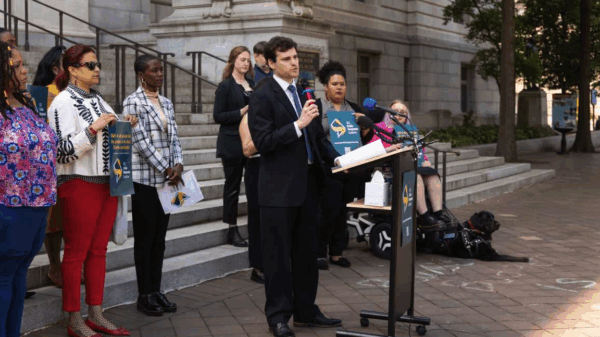
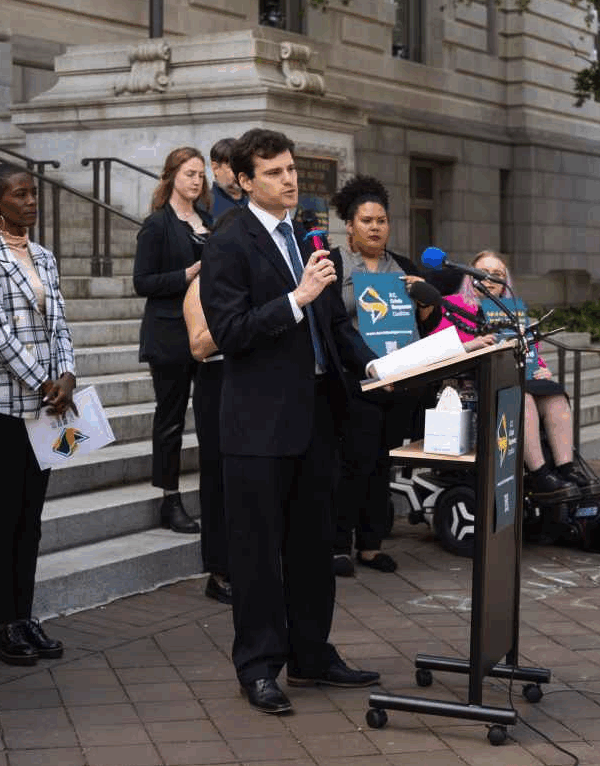
Bread for the City v. District of Columbia – Challenging Discrimination in Mental Health Emergency Response Services
When people in D.C. call 911 for a mental health emergency, it’s generally a Metropolitan Police Department (MPD) officer who responds. The District’s reliance on police as its default first responders for mental health emergencies is not only unfair and unsafe but also unlawful.
Jan 10, 2023
Neloms v. District of Columbia – Challenging D.C. DMV’s Telework Discrimination Against Parents and Caregivers
In December 2022, we filed a complaint with the D.C. Office of Human Rights alleging discrimination based on family responsibilities and seeking compensation for our clients and changes to the DMV telework policy so it does not disadvantage parents and caregivers.
Mar 31, 2022
ACLU V. DEPARTMENT OF JUSTICE – FREEDOM OF INFORMATION ACT CASE REGARDING MENTAL HEALTH CARE IN FEDERAL PRISONS
We filed this lawsuit, together with the ACLU National Prison Project and the Washington Lawyers’ Committee for Civil Rights and Urban Affairs, asking the court to compel the BOP to release the requested records relevant to its care and housing of people with mental illness in BOP custody.
Nov 4, 2021
Cameron v. District of Columbia – Challenging Practice of Needlessly Retaining Arrested Individuals' Cell Phones for Months or Years Without Process
Aug 12, 2021
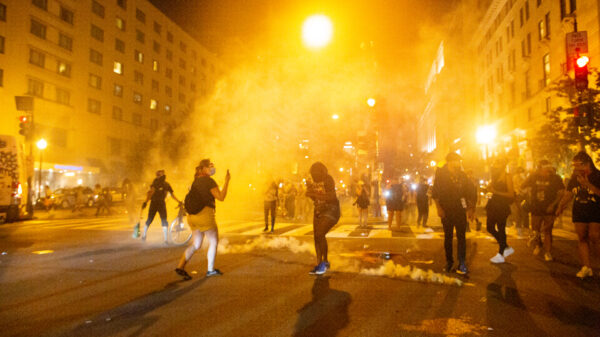
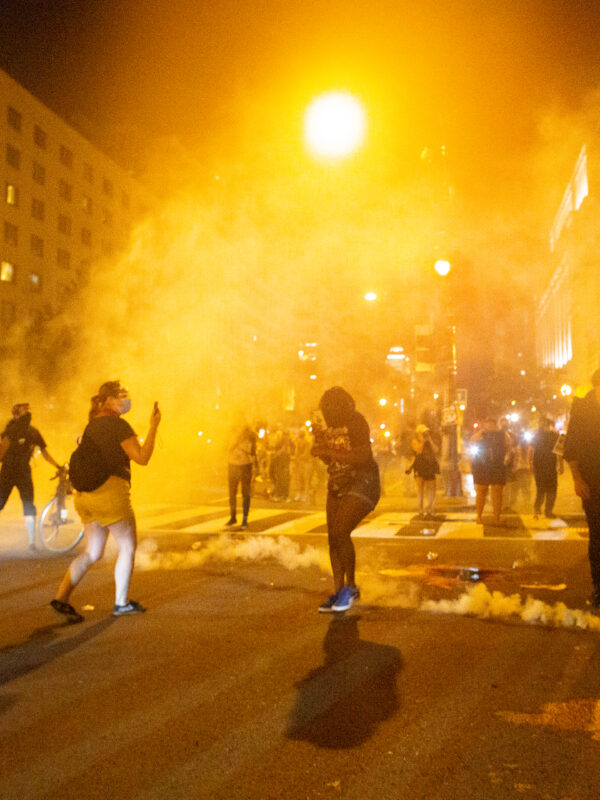
Asinor v. District of Columbia – Challenging Use of Chemical Irritants and Less-Lethal Projectiles Against Demonstrators and Journalists
The ACLU-DC filed a lawsuit on behalf of two photojournalists against the District of Columbia and 8 D.C. Metropolitan Police Department officers for unleashing chemical irritants and stun grenades one month after the D.C. Council instilled a ban on the use of these weapons during demonstrations.
May 18, 2021
"Felon in Possession Project" Freedom of Information Act Request
A ransomware attack of MPD server files raised questions around the existence of a folder entitled "Felon in Possession Project." The ACLU-DC filed a FOIA request for documents affiliated with MPD’s “Felon in Possession Project.”
Stay Informed
Sign up to be the first to hear about how to take action.
By completing this form, I agree to receive occasional emails per the terms of the ACLU’s privacy statement.
By completing this form, I agree to receive occasional emails per the terms of the ACLU’s privacy statement.