Court Cases
Featured Cases
Jun 25, 2026

O’Hara v. Beck – Defending the Right To Protest the National Guard
In Star Wars, the Imperial March is the music that plays when Darth Vader and his storm troopers enter the scene. It’s also the soundtrack of Sam O’Hara’s protest against the National Guard’s presence in D.C.
National Guard troops arrived in the District after President Donald Trump deployed them to support local police—an act that Mr. O’Hara views as a violation of centuries-old norms against militarizing domestic law enforcement and a threat to individual freedom.
To highlight the surreal danger of the deployment, Mr. O’Hara began walking behind Guard members when he saw them in the community, playing The Imperial March on his phone, and recording. Most community members got the point of the protest, and so did several members of the Guard, who either smiled or laughed in response.
Ohio National Guard Sgt. Devon Beck, however, was not amused by the satire. He threatened to call MPD if Mr. O’Hara didn’t stop his protest. When Mr. O’Hara persisted, Sgt. Beck recruited MPD officers to the scene, and the officers proceeded to detain and handcuff Mr. O’Hara, ending his demonstration.
The First and Fourth Amendments (not to mention D.C. law) bar government officials from detaining people just because of their speech. Mr. O’Hara is suing to vindicate that principle.
Sgt. Beck moved to dismiss the claims against him, arguing among other things that he is entitled to the defense of qualified immunity because he did not violate rights that were "clearly established." That motion remains pending.
Meanwhile, in June 2026, the remaining defendants — the D.C. government and its officers — agreed to compensate Mr. O'Hara in exchange for dismissal of the claims against them.
Press Release
Jan 12, 2026

Fell v. Trump (formerly Stainnak v. Trump) - Challenging Purge of DEI-Associated Federal Workers As Discriminatory and Retaliatory for Perceived Political Beliefs
Federal employees filed a complaint against the Trump administration for targeting workers, especially people of color, women, and non-binary workers, for participating in diversity, equity, and inclusion (DEI) activities, violating their First Amendment rights.
All Cases
79 Court Cases
Nov 4, 2021
Cameron v. District of Columbia – Challenging Practice of Needlessly Retaining Arrested Individuals' Cell Phones for Months or Years Without Process
Oct 4, 2021
Mashaud v. Boone – What Does “Constitutionally Protected Activity" Mean in the D.C. Stalking Law?
Apparently recognizing that a law making “communicat[ion]” a crime risks the prosecution of speech protected by the First Amendment, the law provides that “[t]his section does not apply to constitutionally protected activity.” But the D.C. Court of Appeals has never explained what that means.
Aug 12, 2021
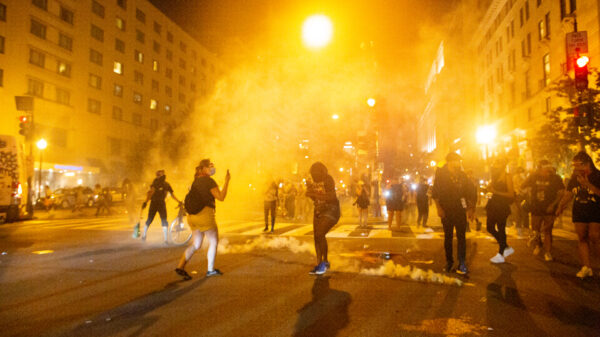
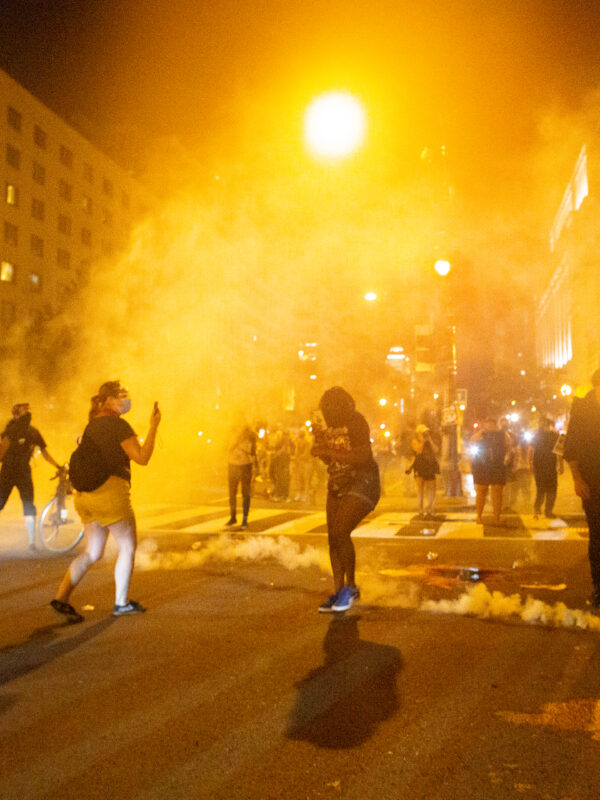
Asinor v. District of Columbia – Challenging Use of Chemical Irritants and Less-Lethal Projectiles Against Demonstrators and Journalists
The ACLU-DC filed a lawsuit on behalf of two photojournalists against the District of Columbia and 8 D.C. Metropolitan Police Department officers for unleashing chemical irritants and stun grenades one month after the D.C. Council instilled a ban on the use of these weapons during demonstrations.
Apr 6, 2021
Chebli v. Kable – Arab-American put on No-Fly List for refusing to become FBI informant
The ACLU. ACLU-DC, and ACLU-MI filed a lawsuit in federal court on behalf of Ahmad Chebli, a Michigan father of two who the U.S. government wrongly placed on the No-Fly List over two years ago, after he refused to become an FBI informant.
Oct 1, 2020
Dashtamirova v. United States
The ACLU-DC filed a formal complaint on behalf of a protestor who was injured by the National Guard’s use of low-flying helicopters to intimidate racial justice demonstrators.
Jun 22, 2020
United States v. Bolton – Federal Government Seeks Prior Restraint Against Former National Security Advisor’s Book
We co-filed an amicus brief urging the court to deny the government’s motion for a temporary restraining order to suppress distribution of the former national security advisor's book because doing so would violate the First Amendment.
Stay Informed
Sign up to be the first to hear about how to take action.
By completing this form, I agree to receive occasional emails per the terms of the ACLU’s privacy statement.
By completing this form, I agree to receive occasional emails per the terms of the ACLU’s privacy statement.