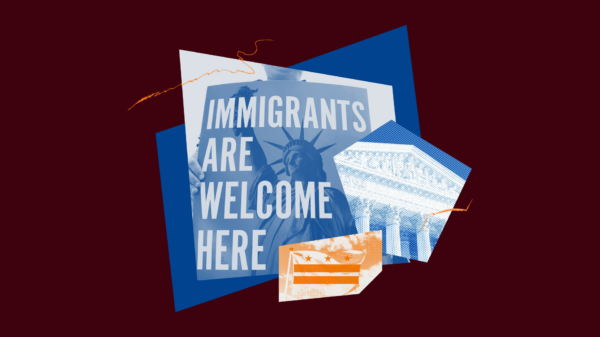
In the DMV (D.C., Maryland, and Virgina), where daily life crosses jurisdictional boundaries, immigration enforcement functions as a regional force. Families in this region often live in one jurisdiction, work in another, and rely on schools, hospitals, and public services spread across both state and district borders.

But your rights do NOT change when you cross these borders.

What to do if you are stopped by ICE

If you are not a U.S. citizen and are stopped or questioned by the police or ICE, you should:

  • Remain silent.
  • Remain calm.
  • Say “no” when asked to search.
  • Never show false documents.
  • Never lie about being a U.S. citizen.

You DO NOT have to answer questions about:

  • Your immigration status.
  • Where you were born.
  • How you entered the country.

AT YOUR HOME

If ICE or the police come to your home

  • Stay calm.
  • Do not open the door.
  • Do not invite them into your home.
  • If they have a warrant for your arrest, ask them to show it to you through the peephole or slip it under the door.
    • An ICE warrant (Form 1-200) does not give them permission to enter your home.
    • A criminal warrant signed by a judge may allow them to enter your home.
  • You have the right to remain silent.
  • Do not lie.
    • Never falsely claim to be a U.S. citizen.
  • Do not show false documents of any kind.
    • This includes a false driver’s license, social security card, or immigration paperwork.
A black‑and‑white photo of the front of a suburban house with an orange geometric background and a stylized ICE badge illustration on the right.

IN A CAR

If you are pulled over while driving or as a passenger

  • Pull over safely and quickly.
  • Turn off the engine, turn on the internal light, and open the window.
  • Upon request, give the police (1) your driver’s license, (2) registration, (3) proof of insurance.
    • If you do not have one of these, do not give false documents.
  • Do not give the officer permission to search your car.
    • If they search your car after you tell them “no,” do not resist.
  • Do not answer questions about your immigration status.
    • If they are the police, you should ask for their name and badge number and write it down.
    • If they are ICE and ask you for a green card or proof of status, if you have it, you must show it to the officer.
A black‑and‑white photo showing a uniformed officer interacting with someone in a car, with an orange geometric background and a stylized ICE badge illustration on the right.

AT WORK

If ICE comes to your workplace

  • Stay calm.
  • Do not run.
  • Go to a private area of the building.
    • ICE needs a warrant from a judge or your employer’s permission to enter any part of the worksite that is not open to the public (ex: a restaurant's kitchen).
  • Remain silent.
    • You do not have to give ICE your ID, work authorization, or any papers.
    • Any information you give them can be used against you.
A black‑and‑white aerial view of a mostly empty parking lot, layered over an orange geometric shape, with a stylized ICE badge illustration on the right.

What to do if you are arrested by ICE

  • Remain calm.
  • Remain silent.
  • Do not discuss your immigration status with anyone but your lawyer.
  • Do not sign anything you do not understand.
  • Say you need an interpreter.

Arrested by the police

If you are arrested by the police

  • You have the right to a lawyer even if you cannot pay.
  • You have the right to a phone call.
  • Remember, all calls are monitored and recorded unless you are speaking to a lawyer.
An orange, sketched illustration of a five‑pointed sheriff‑style star badge on a light background.

Arrested by ICE

If you are arrested by ICE

  • You have the right to hire your own lawyer.
  • You have the right to contact your country’s consulate to tell them you have been detained.
  • Give your immigration number or “A-number” (9 digits) to your family to find you.

An orange, stylized illustration of a U.S. ICE officer badge on a light background.

Legal Support and Resources on Arrest, Detention, and Deportation in D.C., Maryland, and Virginia:

If you or a loved one faces detention, deportation, or any complex immigration issue, these groups provide free or low-cost legal assistance.

Related Content

News & Commentary
Jan 20, 2026
Immigrants are welcome here

What Trump’s Immigration Policies Mean for Families Across the DMV

Since the start of President Trump’s second term, immigrant communities across the District of Columbia, Maryland, and Virginia have been living with an immigration agenda once again defined by fear, intimidation, and aggressive federal enforcement. While these policies are often most visible in Washington, D.C., their consequences do not stop at the District line.