Lillian and Albert Small Capital Jewish Museum
575 3rd Street Northwest
Washington, District of Columbia 20001

Summary
Don’t miss the final screening in our Blacklisted summer film series, featuring Three Brave Men. This 1956 film is based on true local events, telling the story of Greenbelt, MD native Abraham Chasanow, a government employee accused of communist ties. The screening will be followed by a talkback with CJM's Director of Curatorial Affairs, Sarah Leavitt and the ACLU of District of Columbia's Legal Director, Scott Michelman. Presented in partnership with the ACLU of District of Columbia. Popcorn for sale. 1h 28m.
ABOUT THE SPEAKERS
Dr. Sarah Leavitt is the Director of Curatorial Affairs at the Capital Jewish Museum. She holds an MA in Museum Studies and a PhD in American Studies from Brown University and has worked in museums for over 30 years. Since moving to the DC area in 2000, she has worked at the museum of the National Institutes of Health in Bethesda and for 13 years at the National Building Museum in DC. Her previous exhibitions have covered a range of subjects: from women’s sports, to the history of the parking garage, to the border wall between the US and Mexico. Sarah’s publications include several books and articles; some of her favorites cover the history of the pregnancy test, America’s first successful water-powered cotton spinning mill, St. Elizabeths mental health hospital, and the history of domestic advice manuals. Sarah is a member of Temple Shalom, and lives in Silver Spring, MD.
Scott Michelman is Legal Director for the ACLU of the District of Columbia. Scott has litigated a broad range of civil rights and civil liberties issues, including access to the courts, disablity rights, discrimination and selective enforcement, freedom of speech and press, habeas corpus, immigrants’ rights, judicial secrecy, LGBTQ+ rights, police misconduct, political protest, post-September 11 abuse of executive power, prisoners' rights, privacy rights, religious freedom, reproductive freedom, the rights of medical marijuana patients, sentencing law, and unreasonable search and seizure. He has additionally litigated cases about class action law, consumers’ rights, and workers’ rights. Scott is also Shikes Fellow on Civil Liberties and Civil Rights and Lecturer on Law at Harvard Law School, where he teaches Civil Rights Litigation. He has previously taught as clinical or adjunct faculty at American University Washington College of Law, Santa Clara Law School, Seton Hall Law School, and the University of California at Santa Cruz. He is the author of the law school textbook Civil Rights Enforcement (2d ed. 2023, Aspen).
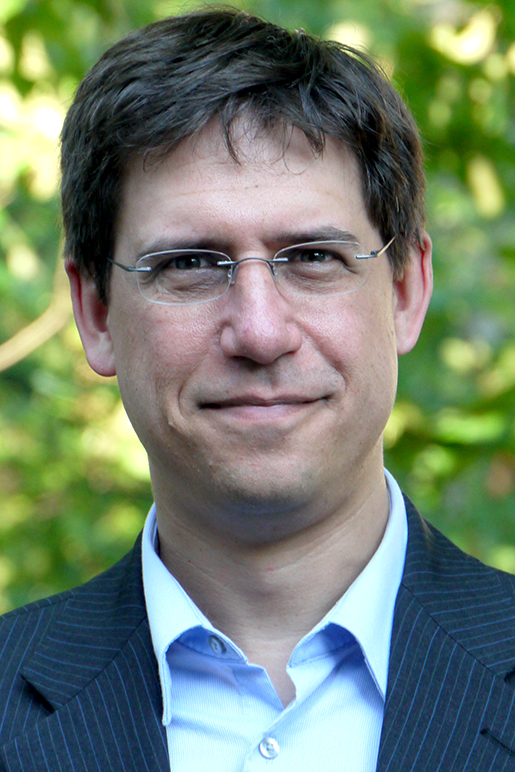
Legal Director
Scott Michelman is the Legal Director of the ACLU of the District of Columbia. Scott has litigated a broad range of civil rights and civil liberties issues, including access to the courts, disability rights, discrimination and selective enforcement, federal officer accountability, freedom of speech and press, habeas corpus, immigrants’ rights, judicial secrecy, LGBTQ+ rights, police misconduct, political protest, post-September 11 abuse of executive power, prisoners' rights, privacy rights, religious freedom, reproductive freedom, the rights of medical marijuana patients, sentencing law, and unreasonable search and seizure. He has also litigated cases about class action law, consumers’ rights, and workers’ rights. Scott has argued before the United States Supreme Court, the highest courts of the District of Columbia and Massachusetts, the U.S. Courts of Appeals for the Second, Third, Fourth, Sixth, Ninth, Tenth and D.C. Circuits, and numerous other federal and state courts around the country. Additionally, Scott is Shikes Fellow in Civil Liberties and Civil Rights and Lecturer on Law at Harvard Law School, where he has been invited to teach Civil Rights Litigation for more than a dozen years. He has previously taught as clinical or adjunct faculty at American University Washington College of Law, Santa Clara Law School, Seton Hall Law School, and the University of California at Santa Cruz. Scott is the author of the law school textbook Civil Rights Enforcement (Aspen, 3d. ed. forthcoming 2026). In connection with his practice, Scott has been quoted by national radio, television, and print media outlets, including NPR, CNN, MSNBC/MSNow, Fox News, Democracy Now, Al Jazeera, The New York Times, The Washington Post, The Los Angeles Times, The Wall Street Journal, Associated Press, Reuters, USA Today, U.S. News and World Report, The Guardian, ProPublica, The New Yorker, Newsweek, Politico, Buzzfeed, and The National Law Journal, and his commentary and opinion have appeared in SCOTUSblog, Slate, and The Wall Street Journal, among others. His legal scholarship includes The Branch Best Qualified To Abolish Immunity, 93 Notre Dame L. Rev. 1999 (2018); Doing Kimbrough Justice: Implementing Policy Disagreements With the Federal Sentencing Guidelines, 45 Suffolk L. Rev. 1083 (2012) (with Jay Rorty); and Who Can Sue Over Government Surveillance? 57 UCLA L. Rev. 71 (2009), reprinted in 26 Saltzman & Wolvovitz, Civil Rights Litigation & Attorney Fees Annual Handbook 79 (2010). Before joining the ACLU-DC in 2016, Scott was an attorney with Public Citizen Litigation Group and before that the ACLU Criminal Law Reform Project. He graduated magna cum laude from Harvard Law School, where he was an editor of the Harvard Law Review, and he went on to clerk for the Honorable Betty B. Fletcher of the United States Court of Appeals for the Ninth Circuit. A member of the British royal family once broke his thumb playing football under Scott’s supervision. Important disclaimer: Communicating with us through this website does not create an attorney-client relationship; only a signed agreement can create such a relationship. Additionally, past success is no guarantee of future results, even if we agree to represent you.
Stay Informed
Sign up to be the first to hear about how to take action.
By completing this form, I agree to receive occasional emails per the terms of the ACLU’s privacy statement.
By completing this form, I agree to receive occasional emails per the terms of the ACLU’s privacy statement.