Freedom of Speech and Association

The First Amendment protects our freedom to speak, assemble, and associate with others. These rights are essential to our democratic system of governance. The Supreme Court has written that freedom of expression is "the matrix, the indispensable condition of nearly every other form of freedom." Without it, other fundamental rights, like the right to vote, would cease to exist. Since its founding, the ACLU has advocated for broad protection of our First Amendment rights in times of war and peace, to ensure that the marketplace of ideas remains vigorous and unrestricted.
Free Speech

The First Amendment protects our freedom to speak, assemble, and associate with others. These rights are essential to our democratic system of governance. The Supreme Court has written that freedom of expression is "the matrix, the indispensable condition of nearly every other form of freedom." Without it, other fundamental rights, like the right to vote, would cease to exist. Since its founding, the ACLU has advocated for broad protection of our First Amendment rights in times of war and peace, to ensure that the marketplace of ideas remains vigorous and unrestricted.

The Latest

Podcast
Satire Isn’t a Crime: Defending the Right to Protest the National Guard - Episode 3 of the podcast A more prefect district

Satire Isn’t a Crime - Defending the Right to Protest the National Guard

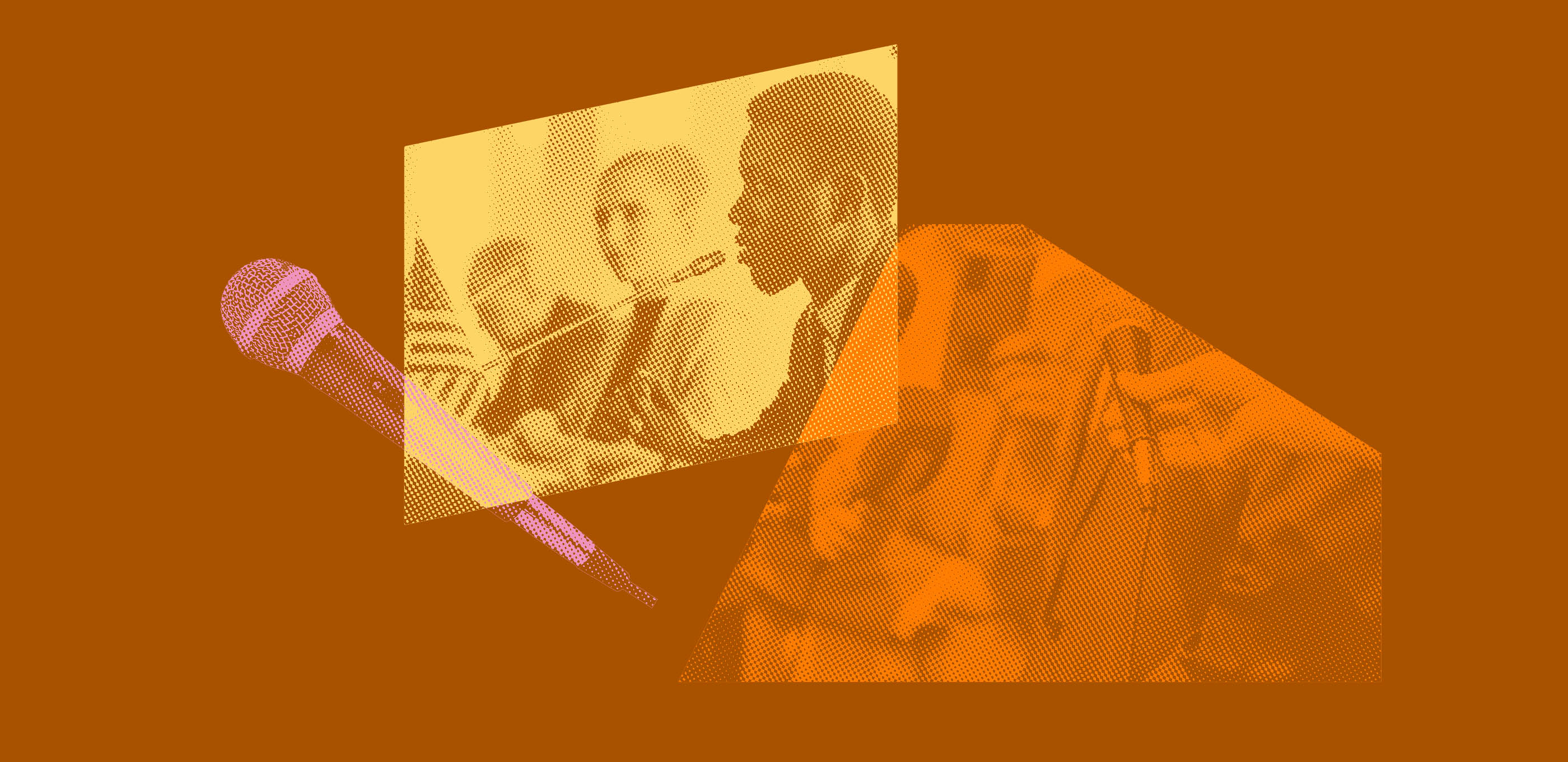
Can the Government Punish You for Mocking It? In this episode, host Amber Taylor, Strategic Communications Director at ACLU-D.C., sits down with our client Sam O’Hara to discuss his detention by D.C. police after he recorded National Guard members patrolling Washington, D.C., while playing The Imperial March from Star Wars. Sam shares what happened that day, why he believes his rights were violated, and what his lawsuit, O’Hara v. Beck, could mean for free speech and the right to challenge authority.
Press Release
Placeholder image

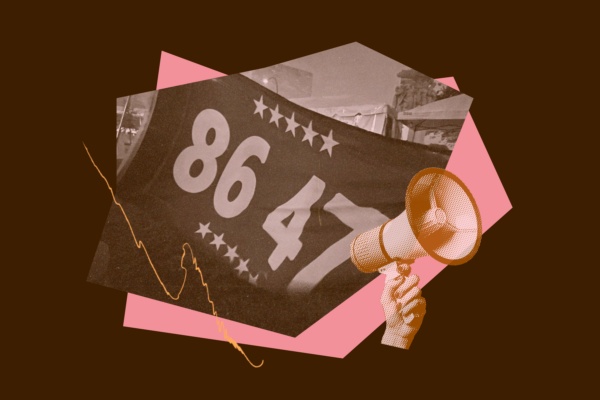
Federal Court Rules 8647 Flag and Anti-Trump Signs Are Protected Speech

A federal district court issued a ruling that the National Park Service cannot interfere with an ongoing protest critical of Donald Trump.
Press Release
Placeholder image

Demonstrators Ask Judge to Affirm their Right to Display Anti-Trump Signs Unlawfully Censored as “Obscene”

Motion for preliminary injunction challenges unlawful censorship of signs that call attention to alleged sexual misconduct by President Trump
Press Release
Placeholder image

Anti-Trump Demonstrators Sue Over First Amendment Violation Based on False Obscenity Claims

National Park Service unlawfully targeted demonstration signs that call attention to alleged sexual misconduct by President Trump.

Cases, Campaigns & Legislation


Court Case
Aug 31, 2026

No Permanent Fence Around Lafayette Park

In early 2026, the Trump administration closed Lafayette Park, Malcom X (Meridian Hill) Park, and Columbus Circle (in front of Union Station) for repairs. The other two parks reopened in the spring, but even though the repairs at Lafayette Park have been completed it remains closed, surrounded by an ugly anti-riot fence. In mid-July, the National Park Service published a proposal to erect a permanent fence around Lafayette Park, which it asserts is needed to protect the security of the President in the White House, but which we view as yet another effort by the Trump administration to prevent speech the President doesn’t want to hear. For more than 100 years, Lafayette Park has been perhaps the single most important forum for First Amendment activity directed at the President, from the Suffragists of the early 20th Century to the Black Lives Matter protests after George Floyd’s murder. While the proposed fence would have gates that would theoretically be open under normal circumstances, we fear that they would often be closed to prevent First Amendment activity or even to trap demonstrators already in the park. Under the National Historic Preservation Act, proposed changes to historic places like Lafayette Park must be reviewed with an eye toward minimizing destruction or interference with their historic values. We have signed up as a “consulting party” under section 160 of that Act so that we can participate in that process, seeking to protect the park’s historic use as a public forum. As part of that process, on August 26, 2026, we submitted a letter to the National Park Service outlining our concerns. We will continue to participate as that process moves forward.
Court Case
May 4, 2026

Doe v. Mullin – Challenging DHS’s Use of Administrative Summonses to Unmask Social Media Critics

The Department of Homeland Security has ordered multiple Internet Service Providers and social media companies to disclose sensitive information about users who criticized DHS’s practices. DHS has issued these demands through administrative summonses or subpoenas, which require approval only by DHS itself and not a neutral judge. This case challenges another instance of this disturbing trend. Plaintiff John Doe regularly criticizes President Trump and DHS on X and other social media platforms, with his posts collectively receiving well over 100,000 views. Now, DHS wants to obtain detailed information about Mr. Doe and his activities. The government sent an administrative summons to Google, ordering it to disclose “[a]ll records and other information” it possesses relating to the Gmail account Mr. Doe linked to his X account. DHS’s demand expressly includes Mr. Doe’s name, his location information, and data on his online activity—records that could allow the government to trace Mr. Doe’s physical movements and discern the things he reads online and the people with whom he communicates there. Court cases challenging similar summonses have involved the U.S. government targeting people inside the U.S. This case represents a potentially new and troubling development, as Mr. Doe is a Canadian citizen and resident. If DHS can surveil him, it may be able to monitor any critic anywhere on the globe. DHS’s actions in this case are unlawful. The government can act only based on authority conveyed via the Constitution or a statute and here, the statute DHS invoked provides no basis to issue the summons. Represented by the ACLU-DC and the ACLU of Northern California, Mr. Doe brings this case to stand up to DHS’s blatant abuse of government power.
Court Case
Jun 30, 2026

Accountability NOW USA v. Griess, et al. – Defending the Right to Display Signs Accusing President Trump of Sex Crimes

Accountability NOW is a group of volunteers who have been holding a permitted, 24/7 anti-Trump vigil on National Park Service (NPS) land in Washington, D.C., for months. After they erected signs saying "Trump raped little girls,” and “Kids, if your parents are MAGA, they love child rapists,” NPS demanded they remove the signs because they are “obscene,” and therefore, not protected by the First Amendment. But the signs are not obscene. Legal obscenity is an extremely narrow exception to the First Amendment’s protection and does not apply to signs like these. For example, the media has extensively covered Jeffrey Epstein’s crimes on TV and online, but those reports do not satisfy the legal test for obscenity, which is designed to capture things like hardcore pornography that have no artistic or other value. This case shows why the test is so strict: If politicians could stop you from accusing them of sexual misconduct by saying that the accusation is obscene, they could avoid accountability. That’s what the First Amendment prevents. We are asking the court to prohibit NPS from revoking its demonstration permit on this trumped-up ground. We hope that this lawsuit will remind government officials to take Americans’ First Amendment rights seriously. After seeking unsuccessfully to persuade the government that it should reverse its position, we filed a motion for a preliminary injunction on May 26. At 5 a.m. the next morning, Park Police officers came to our client’s demonstration and informed them that a flag they were flying, which said “8647,” was a threat to the President and must be removed or they would be violating their permit. That afternoon we filed an application for a temporary restraining order, asking the court to prohibit the government from taking action against the demonstration if it resumed displaying that flag. On May 28 the court heard argument on our motion, and on Monday June 1 it was granted, ordering the government not to take action against the demonstration for flying an “8647” flag. That temporary order can last only 28 days, so on June 10 we filed a motion for a preliminary injunction, seeking an order that will last through the litigation of the case prohibiting the government from retaliating against the demonstration for flying the flag or displaying the posters about Trump’s alleged sex crimes. On June 29, the court issued a final decision in the case, finding that the facts were undisputed and no further proceedings were needed. The court concluded that “both sets of materials represent core protected speech, and, as a result, the NPS may not compel their removal or condition Plaintiff’s continuing entitlement to a demonstration permit on Plaintiff’s refraining from that speech.” Accordingly, the court issued a permanent injunction protecting Accountability NOW’s right to display the rape signs and the 8647 flag.
Court Case
Mar 27, 2026

Zaid v. Executive Office of the President – Challenging Revocation of Security Clearance for Retaliatory Political Reasons

In March 2025, President Trump issued an order directing “every executive department and agency head . . . to revoke any active security clearances held by” a group of named individuals “and to immediately rescind their access to classified information.” That list included Hillary Clinton, Kamala Harris, Elizabeth Cheney, former Secretary of State Antony Blinken, New York Attorney General Letitia James, former President Joseph Biden, “and any other member of Joseph R. Biden Jr.’s family.” That list also included Mark Zaid, an attorney who represents national security whistleblowers and other clients in cases involving classified information—significantly including the intelligence community whistleblower whose disclosures resulted in President Trump’s first impeachment. President Trump has called Mr. Zaid a “sleazeball,” and has said “he should be sued and maybe for treason.” Mr. Zaid sued, and in December 2025 won a preliminary injunction restoring his clearance. The government appealed, and on March 27, 2026, we filed an amicus brief supporting him, together with the National ACLU, the Knight First Amendment Institute at Columbia University, the Electronic Frontier Foundation, and the Rutherford Institute. Argument is scheduled for May 14, 2026.