
Asinor v. District of Columbia – Challenging Use of Chemical Irritants and Less-Lethal Projectiles Against Demonstrators and Journalists
- Filed: Aug 12, 2021
- Status: Open
- Latest Update: Oct 23, 2026
Summary
The ACLU-DC filed a lawsuit on behalf of two photojournalists against the District of Columbia and 8 D.C. Metropolitan Police Department officers for unleashing chemical irritants and stun grenades one month after the D.C. Council instilled a ban on the use of these weapons during demonstrations.
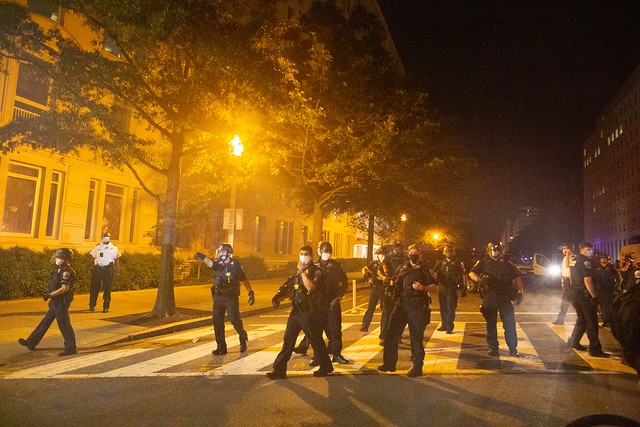
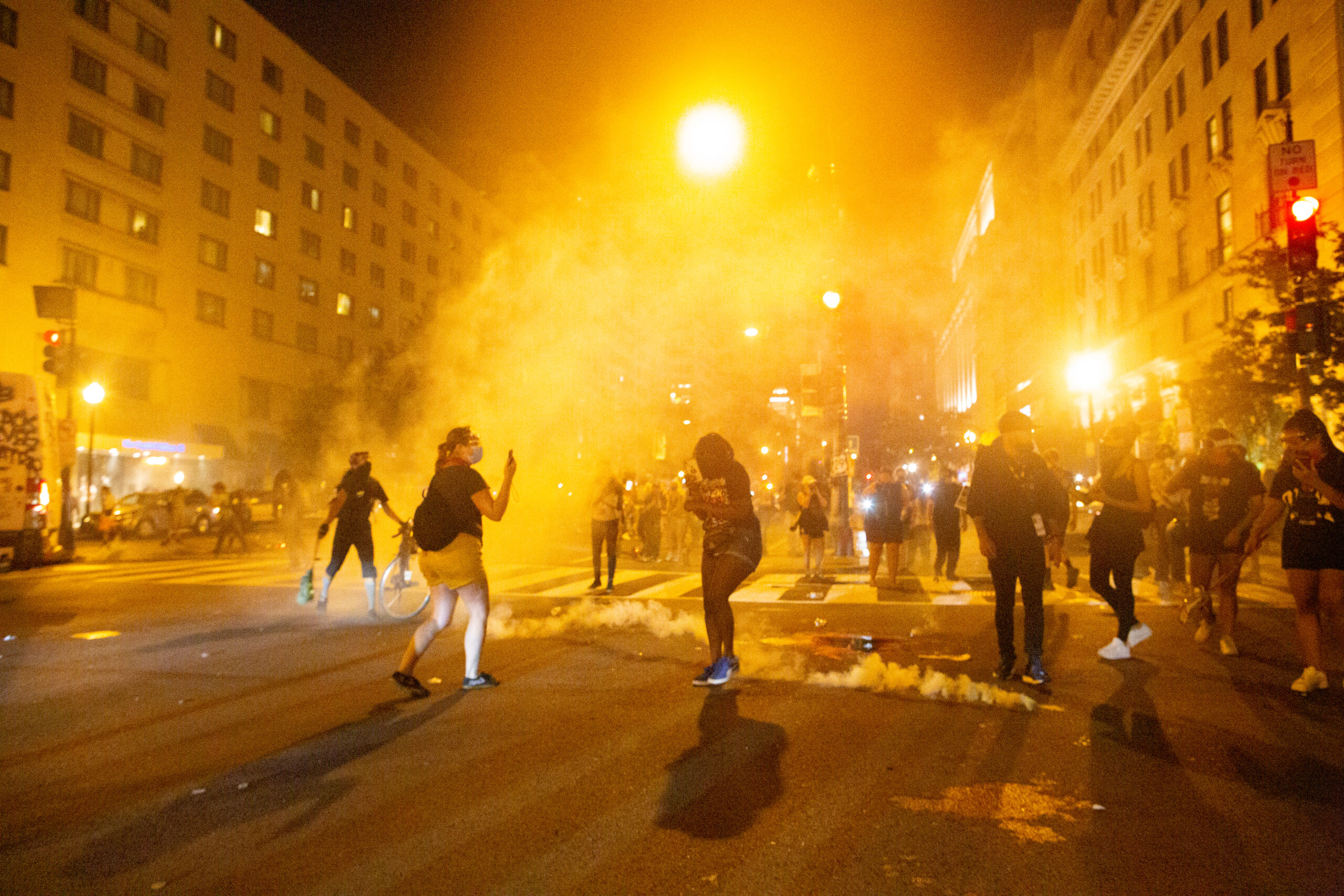
This case challenges two forms of abuse that the District’s Metropolitan Police Department (MPD) regularly inflicts on the people it polices. The first is the use of chemical irritants and explosive munitions, such as flash bang grenades, to break up protests. These tactics can cause demonstrators severe pain and long-term trauma. In July 2020, the D.C. Council banned MPD from using these weapons to disperse demonstrations. Yet on August 29, 2020, MPD officers sprayed chemical irritants and deployed flash grenades against a crowd of people near Black Lives Matter Plaza (near 16th Street NW and H Street NW) who were protesting brutality and racism in policing. Journalists Oyoma Asinor and Bryan Dozier, who were present to cover the event, were hit by the irritants and terrified by the explosions. They suffered searing pain and significant emotional distress as a result.
The second tactic at issue is MPD’s practice of retaining cell phones seized from arrestees long after the law enforcement need for the phones has ended. Since 2017, there have been hundreds of instances where MPD took phones from arrestees and retained them for months after prosecutors declined to charge the owner, charges against the owner were dropped, or the time reasonably needed to obtain and execute a warrant expired. For instance, in this case, when Mr. Asinor covered another protest against unjust policing that occurred near Black Lives Matter Plaza on August 30, MPD arrested him (even though he broke no laws), seized his phone and camera, and held these items for more than eleven months after prosecutors declined to charge him with any crimes.
On behalf of Mr. Asinor and Mr. Dozier, we filed this lawsuit to challenge these practices, which violated their rights under D.C. law and the Constitution.
On August 29, 2022, the district court dismissed the plaintiffs’ complaint. The plaintiffs have filed a notice of appeal with the United States Court of Appeals for the D.C. Circuit. We argued the case before the D.C. Circuit in September 2023.
After the district court dismissed the plaintiffs’ complaint, we appealed to the D.C. Circuit. On August 9, 2024, the D.C. Circuit reversed the district court. In doing so, it issued an important precedent, holding that, when police officers take your property after an arrest, the Fourth Amendment bars them from holding onto it for an unreasonable period of time.
In the fall of 2025, the District again moved to dismiss Plaintiffs’ claims, arguing that it could not be held liable for the wrongful retention of Mr. Asinor’s property it did not result from a “policy of custom” of the District itself, and that the claims about the wrongful use of weaponry were not sufficiently related to the property claims to be included in the same lawsuit. In the fall of 2026, the court denied the motion to dismiss as to the property claims, ruling that Mr. Asinor alleged enough facts in the complaint — including hundreds of examples of unjustifiably long retentions of property — to make it “plausible” that the D.C. government had a “custom” of not returning arrestees’ property. The court dismissed the other claims as not sufficiently related, but they can still be pursued in D.C. Superior Court. The property claims will proceed to discovery.
Documents
- Asinor & Dozier v. D.C. — Second Amended Complaint (Dec. 2021)
- Asinor & Dozier v. D.C. — Plaintiffs’ Opposition to Partial Motion to Dismiss (Feb. 2022)
- Asinor & Dozier v. D.C. — Court’s Memorandum Opinion Granting Partial Motion to Dismiss (Aug. 2022)
- Asinor & Dozier / Cameron v. D.C. — Plaintiffs’ Opening Brief on Appeal (Feb. 2023)
- Asinor & Dozier / Cameron v. D.C. — D.C. Circuit Opinion (Aug. 2024)
- Asinor – D.C. Cir Reply Brief
- Asinor Opp to Second D.C. MTD
- Oct 21, 2026 Cameron Asinor Opinion on MTD
Affiliate: DC
Download documentAffiliate: DC
Download documentAffiliate: DC
Download documentAffiliate: DC
Download documentAffiliate: DC
Download documentAffiliate: DC
Download documentAffiliate: DC
Download documentDate Filed: Oct 21, 2026
Affiliate: DC
Download documentLearn More About the Issues in This Case
Related Content

ACLU-DC Testifies Before the D.C. Council Committee on the Comprehensive Police and Justice Reform Amendment Act
Stay Informed
Sign up to be the first to hear about how to take action.
By completing this form, I agree to receive occasional emails per the terms of the ACLU’s privacy statement.
By completing this form, I agree to receive occasional emails per the terms of the ACLU’s privacy statement.